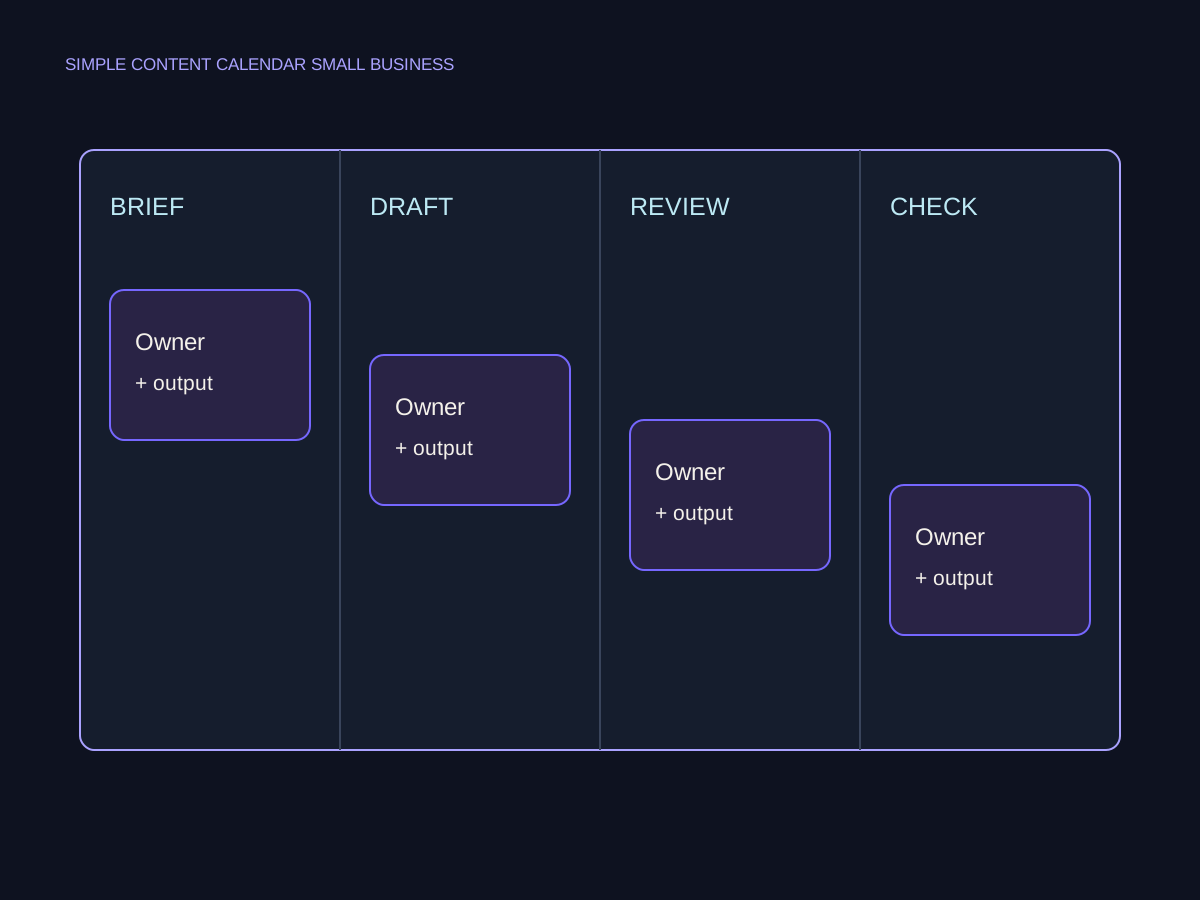
A simple content calendar records what the team will create or update, who owns it and when it can be reviewed and published. Start with the capacity you actually have, including fact checking and approvals. A manageable plan for useful work is more valuable than a full calendar that hides unfinished material or missing decisions.
Work out how much publishing you can maintain
Look at the entire production task. Research, writing, subject review, images, implementation and verification all need time. If one person has a few hours available each week, do not fill those hours with drafting alone and leave the rest unassigned. Consider which steps can happen together and which depend on someone else.
Orbit Media's 2026 survey of 1,042 content marketers reports an average of three hours and twenty minutes to create a blog post. That self-reported average is context, not a promise that your next guide will take the same time. Use your own completed work to estimate capacity, and leave room for corrections or urgent changes to existing pages.
Build a calendar that includes review
Choose the smallest record that lets someone move the work forward. Each item needs a reader question, intended page, owner, evidence location, review date, publish date and current status. Keep a distinction between an idea, a draft waiting for facts and content ready to release. A scheduled date should not disguise an incomplete review.
Use the same calendar for new articles and important page updates. A change to delivery terms or service availability may deserve attention before a new awareness article. Notes should identify what is missing, not just say “in progress.” If the team already uses a shared document or board, begin there; the tool only needs to make responsibilities and dependencies visible.

Plan a small month of new and updated content
Here is an illustrative month for a small service business: first improve the main service page's scope explanation, then develop one comparison guide, update preparation instructions and finally review the routes between those pages. The sequence creates a coherent set of answers without requiring four new blog posts.
Choose actual topics from observed questions and useful gaps in your own site. A new guide should have a distinct purpose; an update should correct or strengthen a page people already need. The example below is a planning model, not a posting requirement. A business with different capacity can combine the work into fewer releases or spread it over a longer period.
A useful month can include more than new posts
- Week 01
Improve
Clarify a service page.
Existing page - Week 02
Create
Explain one comparison.
New guide - Week 03
Update
Check preparation details.
Existing page - Week 04
Review
Test the connected path.
Journey check
Make dependencies visible before choosing a date
An article is not ready if its central explanation depends on an unconfirmed policy or unavailable specialist. Record what must be supplied, the owner and the point at which it is needed. Photography, product measurements, approved case material and integration checks should enter the plan early enough for review.
Distinguish a hard operational date from a preferred publishing slot. If a service changes on a known date, correcting its existing information may be urgent. An evergreen guide can usually move while an unsupported claim is resolved. Agree a release check so that a draft is not published simply because the calendar says today. Content strategy and production should include these responsibilities in the scope.
Reuse the idea without repeating the page
A good explanation can support several formats when each does a different job. The full comparison can remain on the website; an email can explain one decision; a social post can show an annotated detail or ask the next useful question. Keep changing facts tied to the maintained source page so several versions do not drift apart.
If the team uses AI to speed up adaptation, follow an AI content review process. Provide the approved source and a clear format brief. Then check the new wording, facts and destination. Creating more variations is not useful when they add no information or introduce promises the original page did not make.
Review the plan using outcomes and effort
At the end of a work cycle, compare the planned effort with the work actually completed. Which items needed more review? Which assets were missing? Which publication dates moved for a sound reason? Use those observations to adjust the next plan before adding more channels or topics.
Review outcomes according to the job of the content. A preparation guide may help people arrive with the right information. A comparison may support more informed inquiries. Search clicks can indicate discovery, but they do not tell the whole story. Keep the review practical: improve a useful answer, retire an irrelevant idea or change the production step that repeatedly causes delay.
Before you take the next step.
How often should a small business publish?
Choose a pace that includes research, review and maintenance. There is no universal weekly or monthly blog quota that guarantees search performance. Start from real reader needs and actual capacity.
How far ahead should we plan?
Keep upcoming work specific enough to assign and review. More distant topics can remain provisional. Use business deadlines and available inputs to determine the planning horizon.
Can a spreadsheet be enough?
Yes, when everyone can find the current version and understand the owners, dates and status. Add more tooling only when it solves a real coordination problem.
Sources & context
Original research and official guidance used for the factual statements in this guide. Examples and planning diagrams are illustrative.
- Orbit Media: Blogging Statistics 2026
Original survey of 1,042 content marketers; reported creation time. Its correlations do not establish that a particular calendar causes better results.
- Google Search Central: Creating helpful, reliable, people-first content
Useful editorial check; no universal word count or posting quota.