Content & On-Page SEO.
Write useful answers, verify your claims and connect the right information with clear page roles.

A clear learning sequenceThree phases. Two lessons each.
About 137 minutes35 min reading · ~102 min practice
Make something usefulFinish with your own reviewable project.
A skill you can put to work
Create an evidence-led brief and a useful first draft.
A focused brief
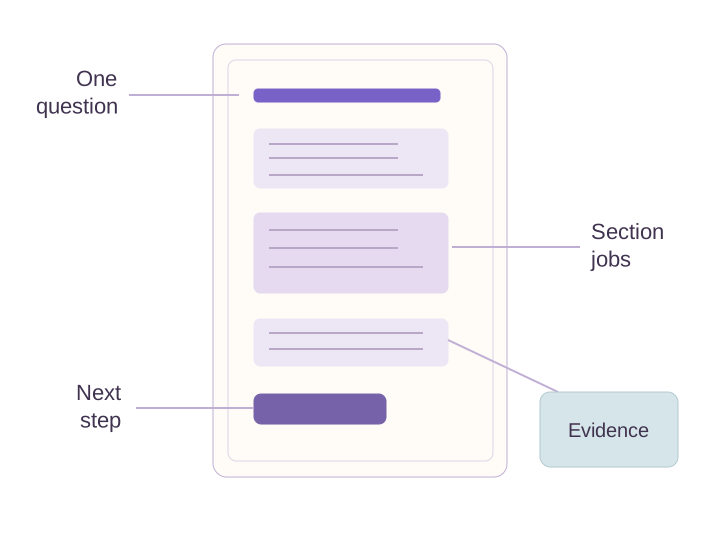
One question, a clear audience and a section plan.
An evidence trail
Know which claims need which source.
A stronger draft
Structure, headings and links with a purpose.
The curriculum
Your next six
useful steps.
Follow the sequence or return to a lesson whenever you need it. Read, try the task and check your reasoning.
Find and verify
Turn real questions into a brief with sources you can check.
Shape the answer
Write the page and give its information a clear hierarchy.
Connect and improve
Add helpful routes and refresh without creating a second owner.
Your final project · The editorial atelier
A brief that can become a useful answer
A fictional lamp maker receives questions about shade size and room fit. Plan one helpful piece of content, using clearly labeled example product facts.
A real chance to practice.
A single primary reader question and owner page.
A section outline with the evidence needed for each claim.
A short example answer and up to three justified body links.
Does every section answer a different useful question?
Are claims sourced or explicitly open?
Would the internal links help at the point they appear?
One illustrative approach. Your choices can differ when you explain them.
Primary question: how to choose a shade size for this specific lamp family.
Evidence: verified dimensions, fitting requirements and product instructions.
Draft explains the measurement and links to the relevant specification only when needed.
Your project is yours to keep. Use the example to review your choices, then make it your own.
Find a project worksheet