Technical SEO.
Separate access, rendering and indexing questions, then document corrections you can test.

A clear learning sequenceThree phases. Two lessons each.
About 134 minutes32 min reading · ~102 min practice
Make something usefulFinish with your own reviewable project.
A skill you can put to work
Produce a small technical audit with a validation plan.
Observable findings
Record the URL, the behavior and the evidence.
A prioritized audit
Distinguish suspected causes from confirmed ones.
Repeatable checks
Define how someone else can validate the correction.
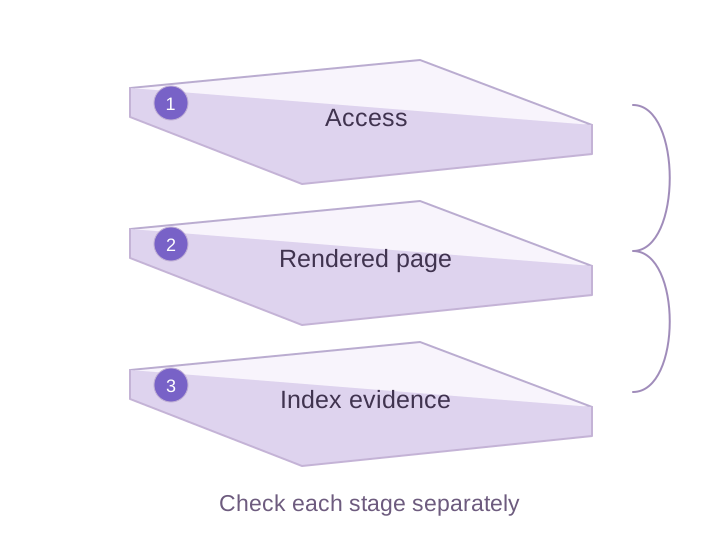
The curriculum
Your next six
useful steps.
Follow the sequence or return to a lesson whenever you need it. Read, try the task and check your reasoning.
Check access and signals
Understand crawl controls, canonicals and redirects.
Inspect what is delivered
Follow navigation and compare source with rendered content.
Validate the change
Assess experience, record findings and plan a careful migration.
Your final project · The diagnostic workshop
A small audit with testable findings
A fictional website has an old URL redirect, a script-inserted main paragraph and a page missing from navigation.

A real chance to practice.
A findings table with URL, observation and evidence.
A prioritized change list with responsible roles.
A repeatable acceptance check for each correction.
Are access, rendering and indexing treated as different questions?
Is a suspected cause distinguished from a confirmed one?
Could a second person repeat the checks?
One illustrative approach. Your choices can differ when you explain them.
Finding: important service URL is reachable only through site search.
Change: add a useful contextual navigation route from its parent.
Check: follow the path, inspect the delivered anchor and confirm the target response.
Your project is yours to keep. Use the example to review your choices, then make it your own.
Find a project worksheet