SEO & web design for Newark, NJ businesses.
We help Newark, NJ businesses explain genuine service coverage and keep market information distinct from physical office claims through SEO, web design and remote collaboration.
Discuss your websiteExplore the approach
Working with Newark businesses remotely. This page describes a service market, rather than a local office.
Newark, New Jersey SEO. Define the market without inventing premises.
Newark, New Jersey is a market context, not an assumed extension of a New York office. We separate the actual service model from a genuine operating address and ask what a Newark page needs to explain differently. That distinction comes before adding more cross-market location pages.
- Identity
- State Newark, New Jersey clearly.
- Delivery
- Explain how the actual service is provided.
- Coverage
- Use confirmed working arrangements rather than a map cue.
- Difference
- Keep the useful market answer separate from shared detail.
Illustrative planning model. Confirmed business information defines the actual brief.
Name Newark, New Jersey and the actual service model.
Clarify Newark, New Jersey and how the service reaches the customer.
- Place name
- Use the state where Newark could be ambiguous.
- Service model
- Explain how the actual work is delivered.
- Practical facts
- Confirm the information needed for the chosen action.
Planning details: name place and model
Use the state name where Newark could otherwise be ambiguous, then explain how the service reaches the customer. A visit to a business, work at the customer's location and remote collaboration involve different arrangements. Describe the one the business supports rather than leaving a city heading to imply it.
Confirm the practical facts needed for the chosen action. The customer may need an operating location, a supported service area or a way to discuss a requirement remotely. Keep those details connected with the relevant offer and let the business approve them before extending the explanation to neighboring markets.
SEO Supreme works with US businesses remotely. This Newark page identifies a service market and does not describe a New Jersey office. The location ledger separates place identity, operating premises and service delivery so each statement can be checked against the actual arrangement.
Explain coverage separately from an operating address.
One operating location can serve wider markets without implying more premises.
- Real location
- Record the actual operating address.
- Served area
- Describe where products or services are provided.
- Single-premises model
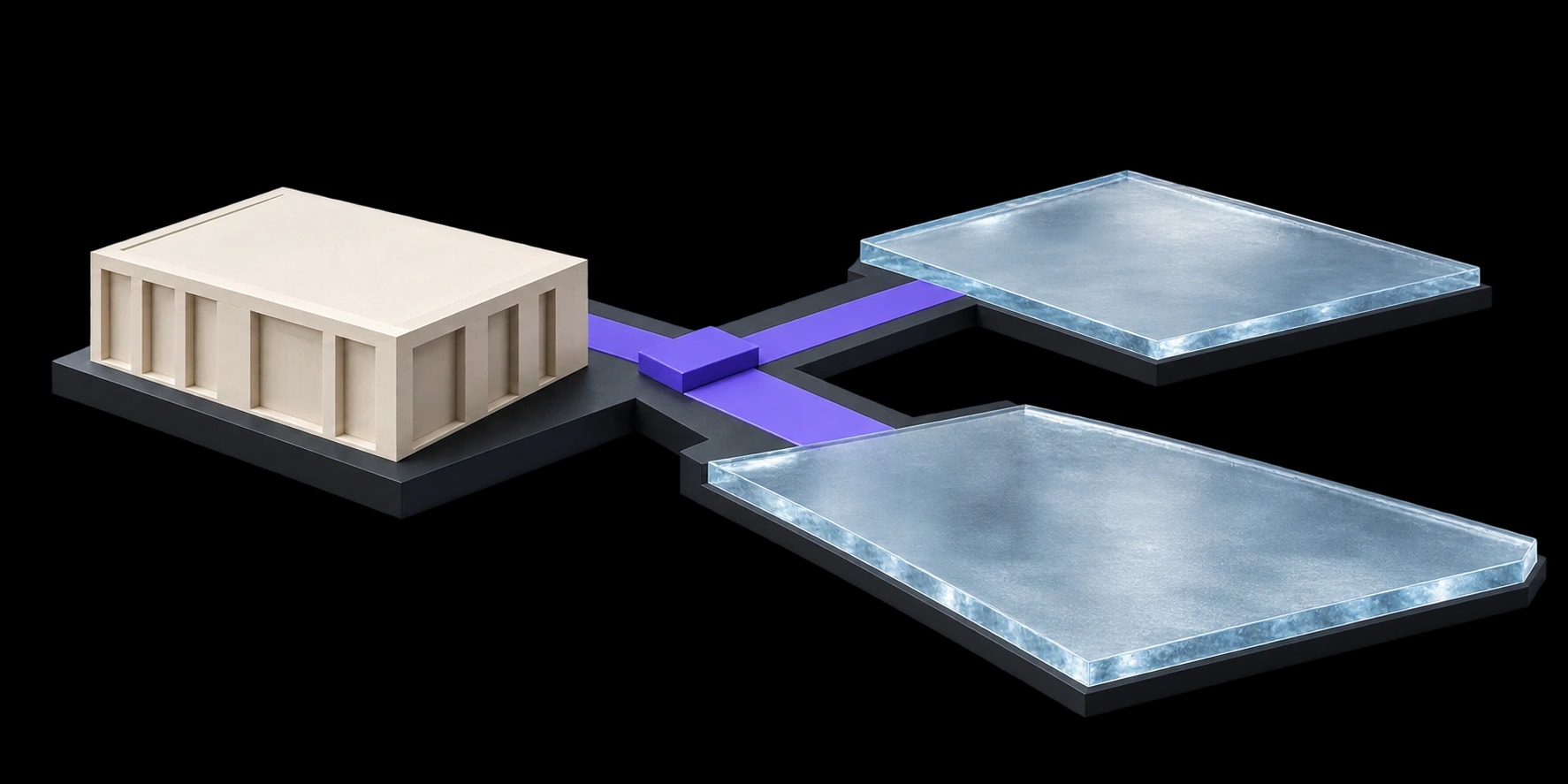
- Use the owned illustration to explain wider reach.
Planning details: separate address and coverage
Keep the business's real location and the places it serves distinct in the content brief. Wider coverage can be useful information without creating another operating address. Explain how the service is provided in those places and which circumstances require the team to confirm suitability.
For an eligible business, Google's Business Profile guidance defines the service area as the places where products or services are provided. The appropriate address display depends on the actual customer-serving arrangement. Review those profile details where applicable alongside the website's account of real operations.
The single-premises model illustrates one operating location connected with wider markets. Its flat glass plates represent customer context, not additional offices or guaranteed coverage. Use approved business information to describe the actual arrangements and keep any location that still needs review clearly identified.
Give each market page a different practical answer.
A separate market destination needs its own practical answer.
- Page purpose
- Write down the local question before adding a page.
- Shared work
- Keep the substantial service explanation in its useful home.
- Different arrangement
- Explain what genuinely changes in this market.
Planning details: give each market a job
Write down what a separate market page needs to explain before adding it. The difference might concern an actual delivery arrangement, customer requirement or supported way of working. Let that practical question determine the content rather than repeating the main service explanation under another city name.
For a hypothetical Newark provider serving customers in another market, the shared service page could explain the work while a useful market section clarifies a genuinely different arrangement. Confirm that difference with the business. A wider audience alone does not supply the facts for another detailed page.
Keep the shared offer easy to find from any useful market context. A person arriving directly on a location page should understand the service and the relevant next action. The generated Newark scene provides city context; the business supplies the operational differences that make the accompanying explanation specific.
Review the page roles before extending the location list.
Check page roles and the inquiry route before extending the location list.
- Connected pages
- Review service descriptions, market answers and links together.
- Unclear signals
- Investigate overlapping roles or geographic ambiguity.
- Inquiry test
- Follow the relevant market request to the receiving team.
An SEO audit can investigate unclear page roles or geographic signals before a larger location-content expansion. For a Newark business, that review can connect the current content, actual operating arrangements and available evidence with a practical decision about what needs improvement.
Planning details: review before expanding
Review the existing service explanations, market descriptions and links together. Identify which page answers each important question and whether its geographic information remains accurate. Record where a useful distinction exists and where a shared explanation already meets the customer's need.
Follow an example inquiry from the relevant market page through to the receiving team. Check that the service and customer location remain understandable and that any remaining scope question is clear. Use the findings to refine the existing route before deciding whether another destination would add useful information.
Newark project questions.
Does a Newark page imply an SEO Supreme office in New Jersey?
No. We work with US customers remotely. The page identifies a service market rather than a local office.
Can wider markets share one service explanation?
Yes. Separate pages need a useful distinction. Accurate coverage information may answer the question within the main service page.
How should a website distinguish an operating address from wider coverage?
Identify the actual operating location separately from the places where the service is provided. Explain the supported delivery model and any review required for a customer's location, using approved information rather than implying extra offices.
What information helps with a cross-market service inquiry?
Provide the relevant service, customer location and practical requirement through the business's supported inquiry route. The team can then review any location-specific arrangement before confirming the next step.
Keep identity and coverage consistent.
Keep the operating address, supported delivery model and purpose of each market page clear. Expand the structure where it adds a useful answer.
Discuss your project