SEO & web design for St. Louis businesses.
We help St. Louis businesses explain where services happen and connect each customer journey with the right next step through SEO, web design and remote collaboration.
Discuss your websiteExplore the approach
- Customer visits
- Explain the confirmed destination and arrangements.
- Team travels
- Describe the actual service and operating conditions.
- Action
- Label whether the step is a request or a booking.
- Handoff
- Check the chosen route through to its real next stage.
Illustrative planning example · confirmed business details set the final scope.
Working with St. Louis businesses remotely. This page describes a service market, rather than a local office.
St. Louis websites. Match the next step to where the work happens.
Does the customer travel to the business, or does the team travel to the customer? A St. Louis service page should settle that before presenting practical instructions. We keep location, preparation and the actual action with the relevant offer, then review each route through its handoff.
Identify who travels and what happens where.
Tie each supported delivery arrangement to the service it actually belongs to.
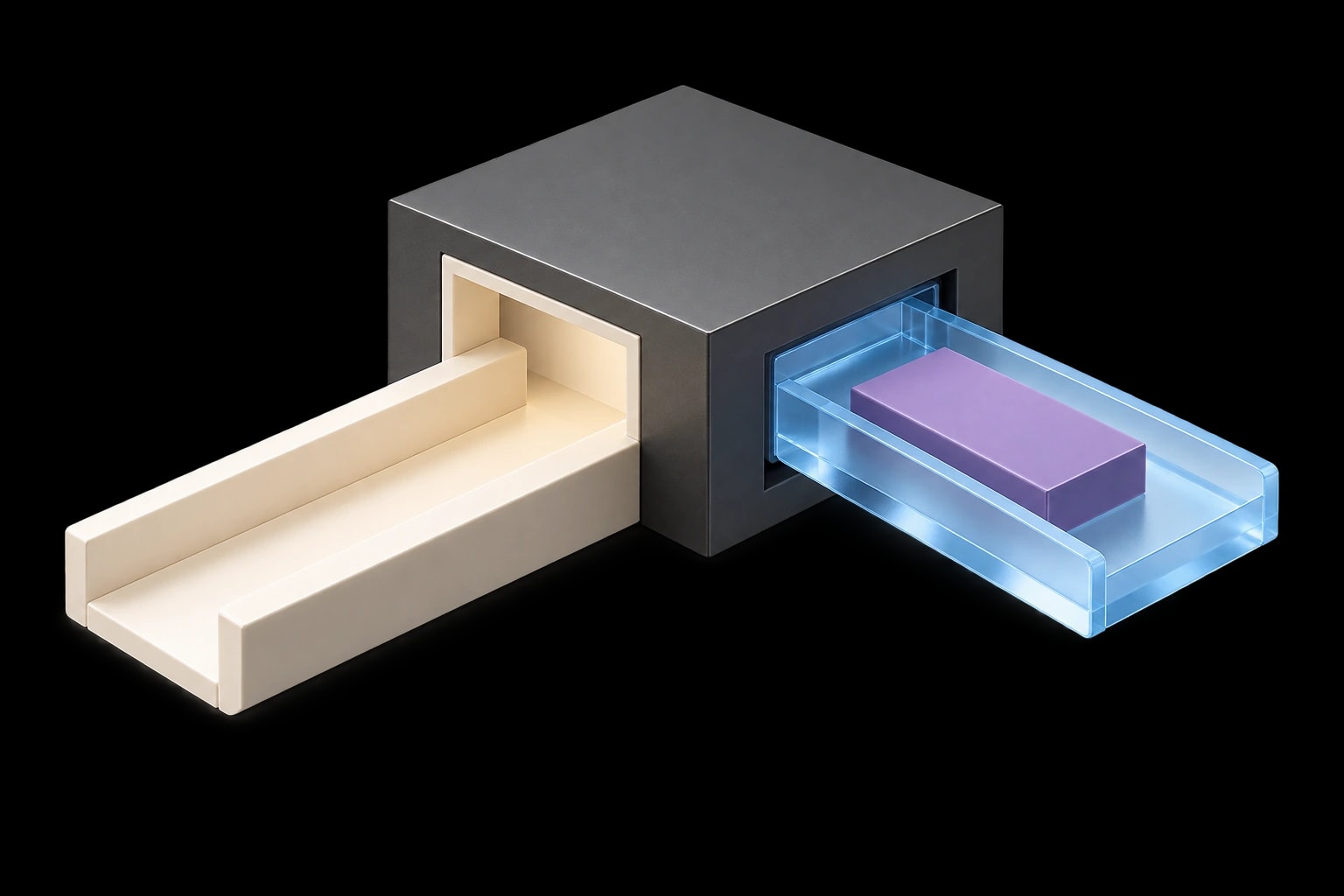
- Customer arrives
- Explain the genuine customer-facing destination.
- Team travels
- Describe work delivered at the job location.
- Remote work
- Include this route only where the service supports it.
Planning details: explain who travels
Describe how each important service is delivered. Does the customer come to a genuine customer-facing location, does the team travel to the job, or can the work happen remotely? Confirm the arrangement with the business rather than infer it from a city name or a contact address.
Google's Business Profile guidance distinguishes a business that visits or delivers to customers from a hybrid business that also serves them at its address. That distinction is useful when reviewing an eligible business's profile. The website should explain its own actual arrangements clearly as well.
A single company may offer more than one route, but that does not mean every service supports all of them. Tie each arrangement to the relevant offer. Someone choosing a service should understand where the work happens before reaching the action at the bottom of the page.
Place practical details beside the relevant offer.
Give each customer the instructions relevant to their own arrangement.
- Customer visit
- Place directions with the visit option.
- On-site work
- Explain confirmed coverage and job-location information.
- Shared service
- Keep common facts together and changes explicit.
Planning details: attach practical detail
For a hypothetical St. Louis business offering both customer visits and on-site work, directions belong with the visit arrangement. An on-site request may instead need confirmed coverage and information about the job location. Give each customer the details that affect their own decision.
Keep shared service information together where it genuinely remains the same. Add a short practical note where an arrangement changes preparation, access or what the customer needs to provide. Those conditions must come from the business; a design should not manufacture rules to fill a section.
Use headings and concise explanations to make the choice readable on a phone. A map can orient a visitor, but essential instructions should also be available in text. The customer should not have to interpret the image to find the next appropriate step.
Label the action for what it actually does.
A requested visit and a confirmed appointment need different wording.
- Visit request
- Explain when a team must review before agreeing time.
- Confirmed appointment
- Keep the booked time and delivery setting understandable.
- Genuine requirement
- Put the actual next condition beside the action.
Planning details: name the true outcome
A visit request and a confirmed appointment are different outcomes. Name the action according to the real system behind it. If a team must review the details before offering a time, the button and response should communicate that review rather than imply the booking is complete.
Where a functioning booking tool does confirm a slot, make the confirmed arrangement understandable. A customer needs to know whether that time concerns a visit to the business, work at their location or a remote conversation. Do not let the selected service lose its delivery context.
Explain any genuine next requirement beside the action. An illustration can show the relationship between arrival and outward delivery, while the readable wording states what submitting the request accomplishes. Keep availability and response promises within what the business has actually agreed.
Test each route through to the handoff.
Follow each supported arrangement into the actual next state and handoff.
- Representative journey
Start from service and practical information.
- Preserved choice
Check the destination keeps the selected arrangement.
- Device review
Check visit and request paths on smaller screens.
Our website design services can bring these delivery routes into one coherent interface. The scope should identify the screens, content and integrations involved, including any booking or enquiry dependency that needs separate confirmation before launch.
Planning details: test both routes
Review a representative journey for each arrangement the website offers. Start with the service, read its practical information and follow the action through to the actual next state. Check that the destination preserves the choice and gives an accurate explanation of what happens next.
SEO Supreme works with St. Louis businesses remotely. Your team confirms the real delivery arrangements and owns the operational decisions. We use that brief to plan a readable service journey, then check the visit and request paths on smaller screens as well as desktop.
St. Louis project questions.
Can one website explain both a shop visit and mobile service?
Yes. The navigation and service pages should distinguish the arrangements and provide the practical information needed for each route.
Should a service-area map show an office in every place?
No. A coverage illustration should represent genuine coverage and remain distinct from actual business addresses.
Does sending a visit request mean the appointment is confirmed?
Only if the actual booking system confirms it. Where the team needs to assess the request or agree a time, the page and its response should say that. Keep the requested arrangement clear throughout the handoff.
What if a service supports customer visits but not on-site work?
Explain the arrangement that the business really offers and provide the relevant visit information. Do not present an on-site route simply because another service supports it. Any alternative needs to reflect the actual operation.
Make both sides of the visit clear.
List the arrangements each service supports, the practical information for each one and what its action really confirms. Those details turn a mixed service offer into clear customer journeys.
Discuss your project